Showing posts with label Jamb. Show all posts

Wednesday, November 23, 2016

Victorian Farmhouse - Part 18 Salvaged Front Door

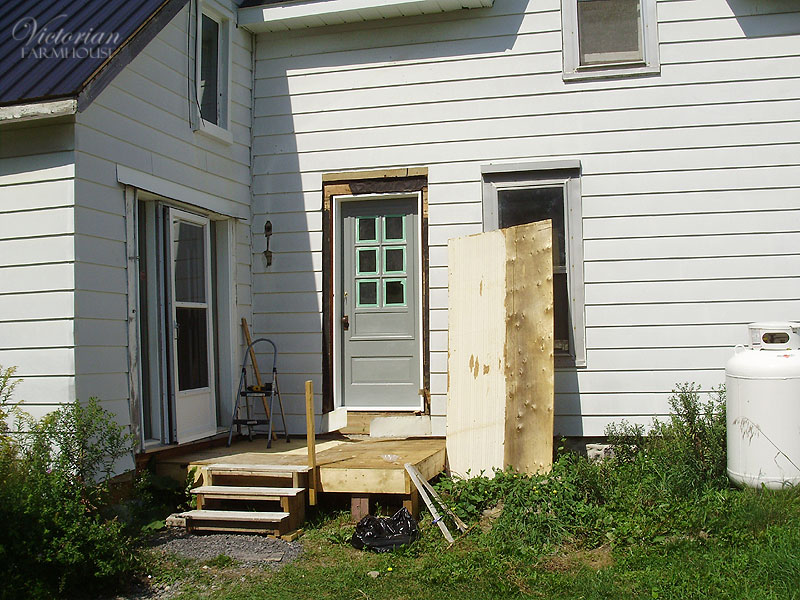
So for me, the two most rewarding projects so far on this house (and depending who you ask this might be different) have been the opening of the archway in the living room, and the re-installation of the side door (front door).

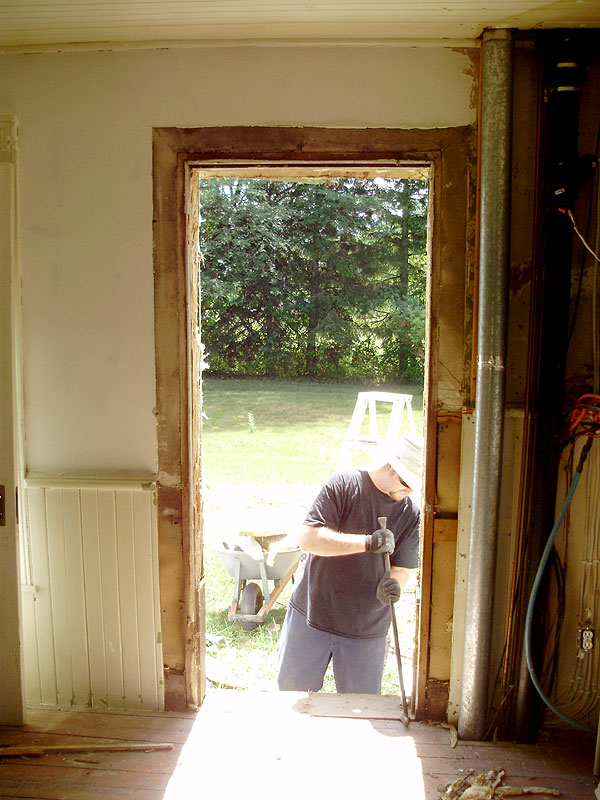
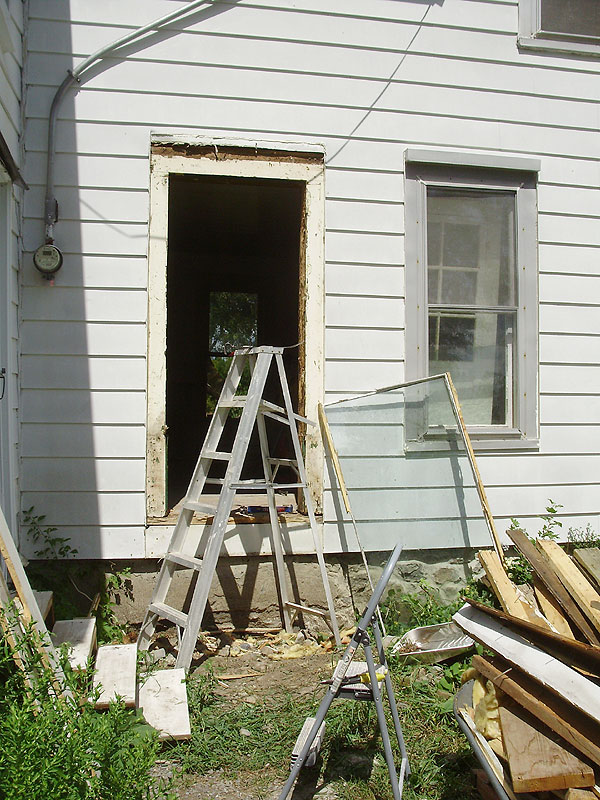
As a memory jogger, you may remember that there was once a door here, but it had been converted (very poorly) to a window with shelves in it.
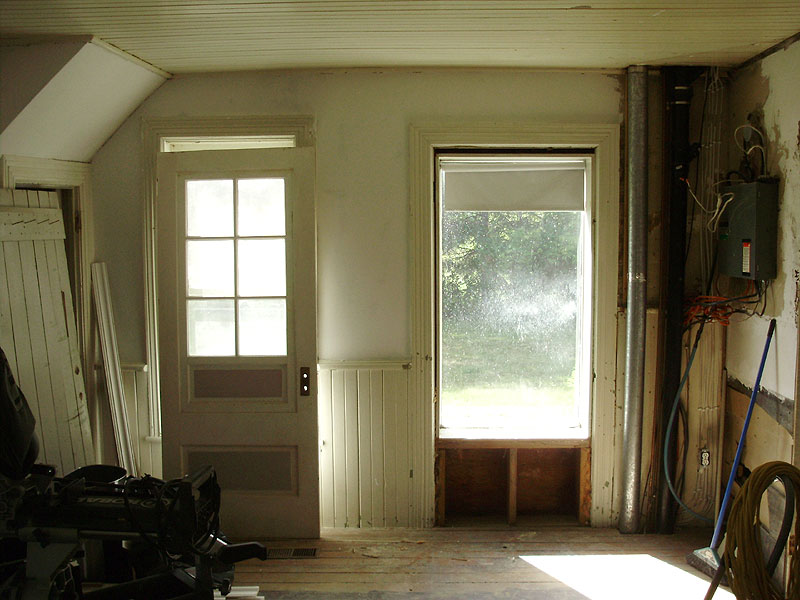
P8050129

I offered Pierre and Angie one of my antique doors (I have several that I will never use). This particular door is around 1920-1930 or so, and it came from a neighbour's house two or three doors down. The window panel was removable, but it has been sealed and painted shut.

Removing the awful old thermopane window and cobbled together bookcase was a huge pain.
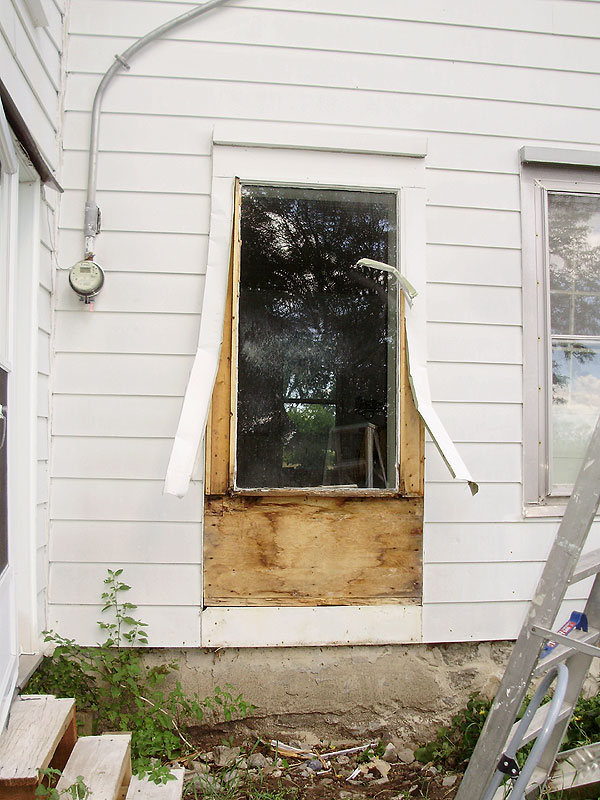
P8050130

P8050131

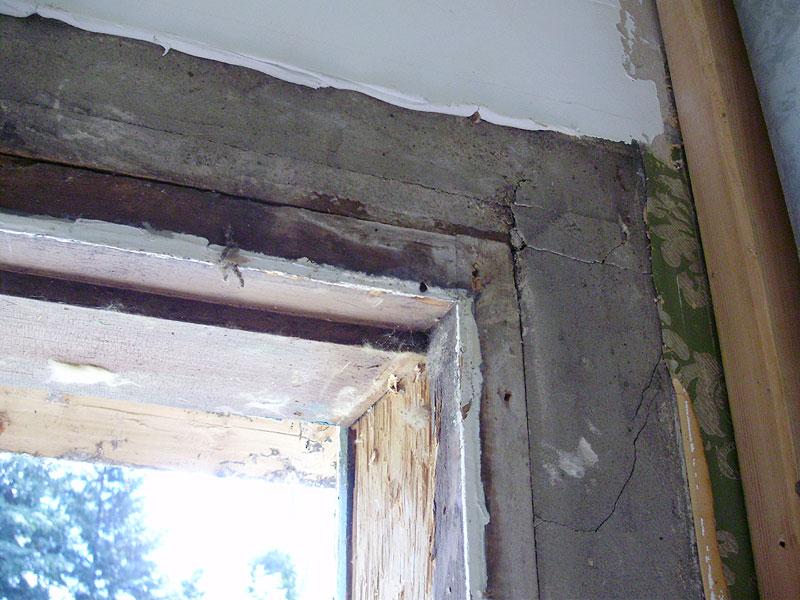
It's too bad that the original door jamb was completely butchered, because it was nearly 2 inches thick, and extremely well made. I spent several days custom making a new one. No photos of that were taken, but the jamb was built from 2x10s that had to be cut down, trimmed, routed and grooved, and the door had to be fitted with the hinges in the frame before installing it in the opening, etc. If you want more details on that, see the posts about my own front door: http://my1923foursquare.blogspot.ca/2015/09/salvaged-front-door-project-part-4.html
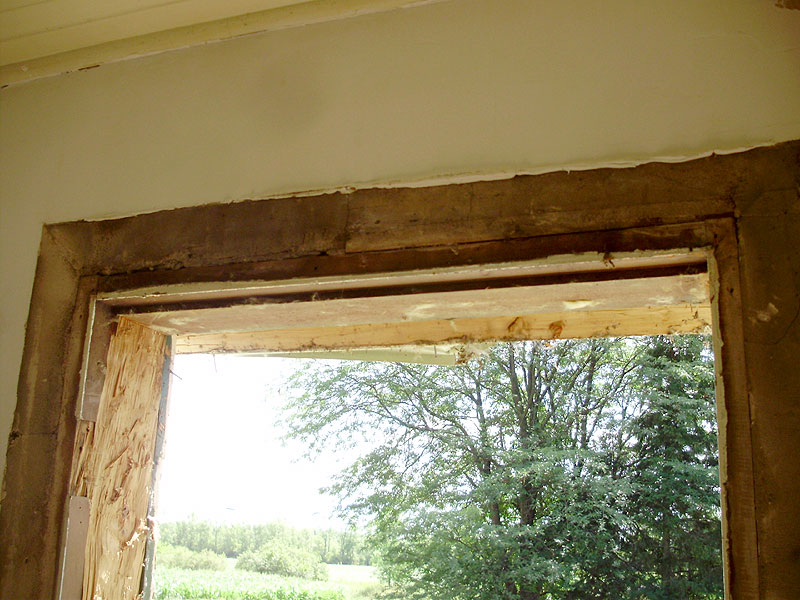
P8050132

P8050134

P8050135

P8050137

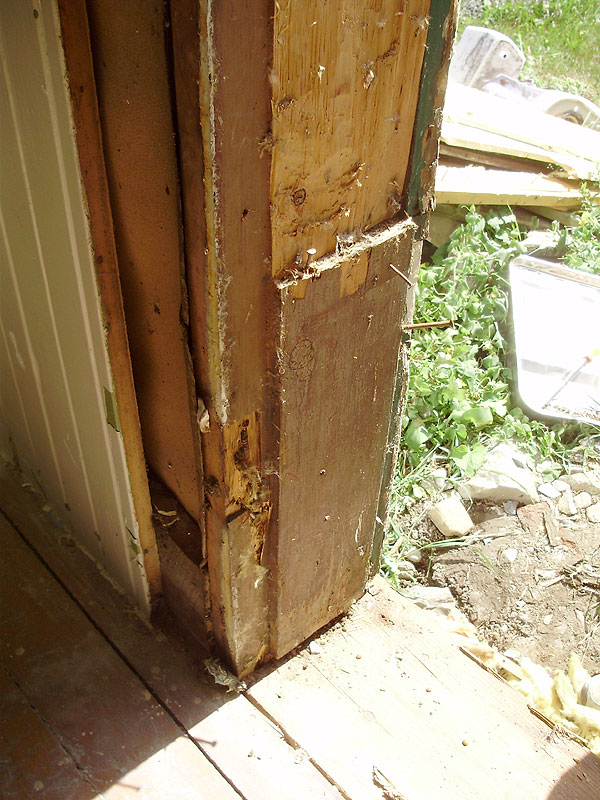
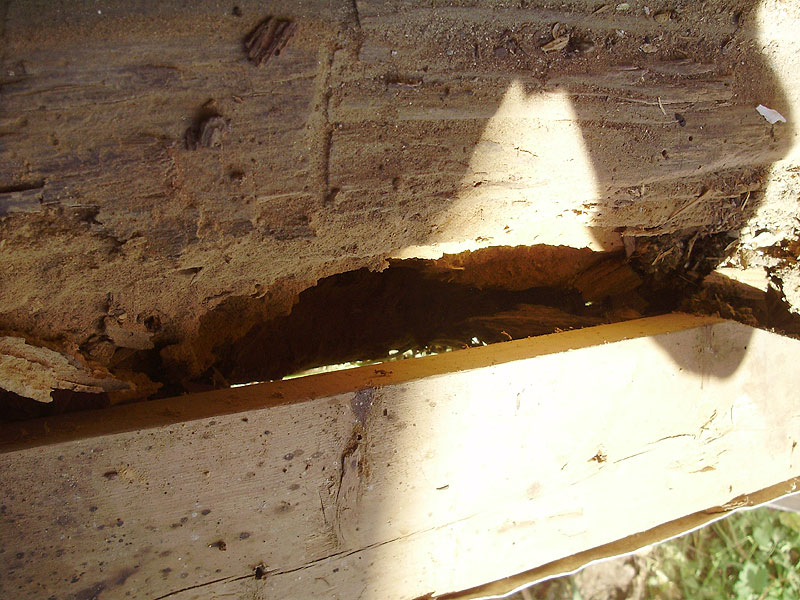
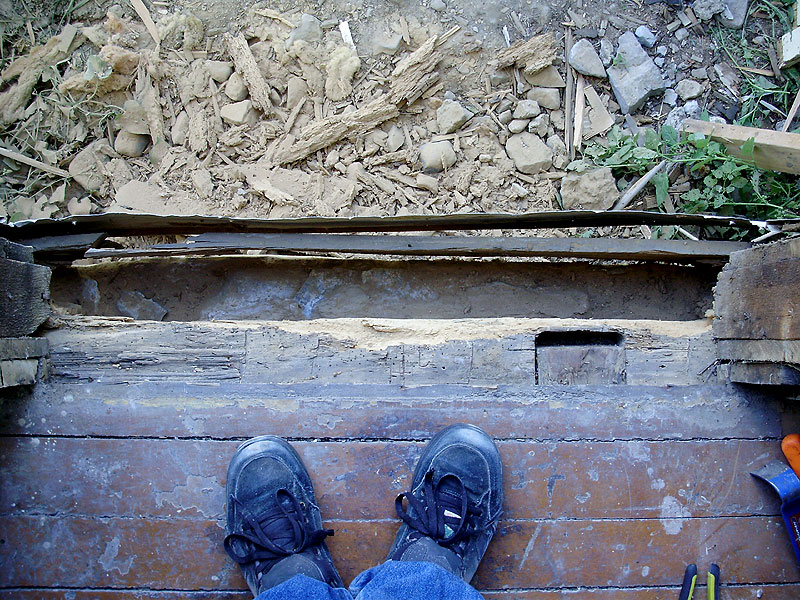
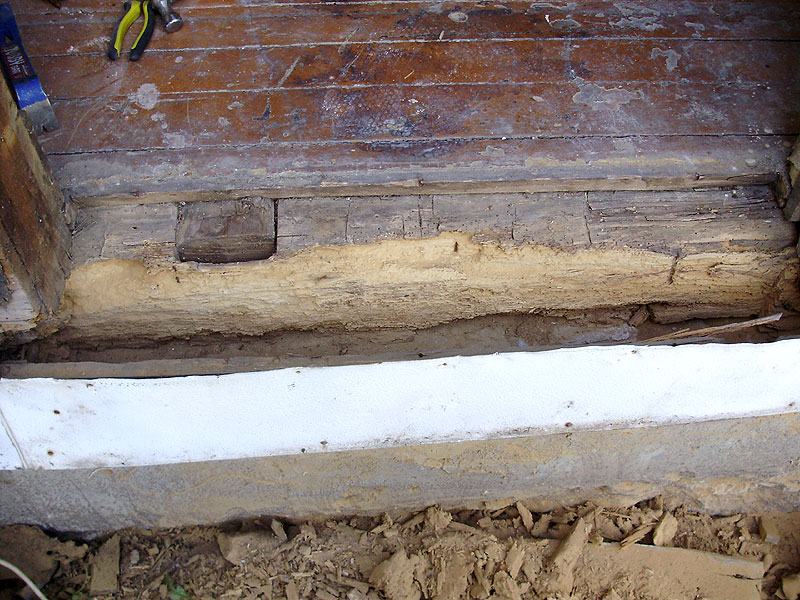
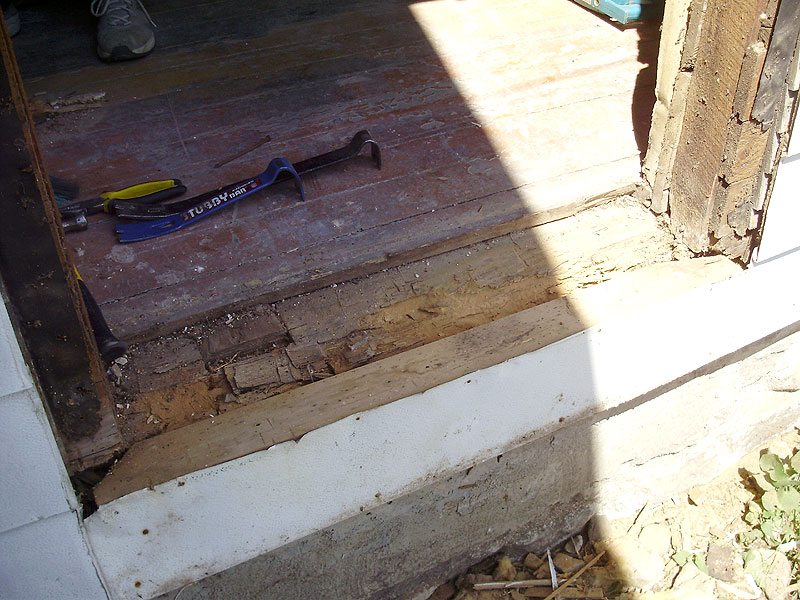
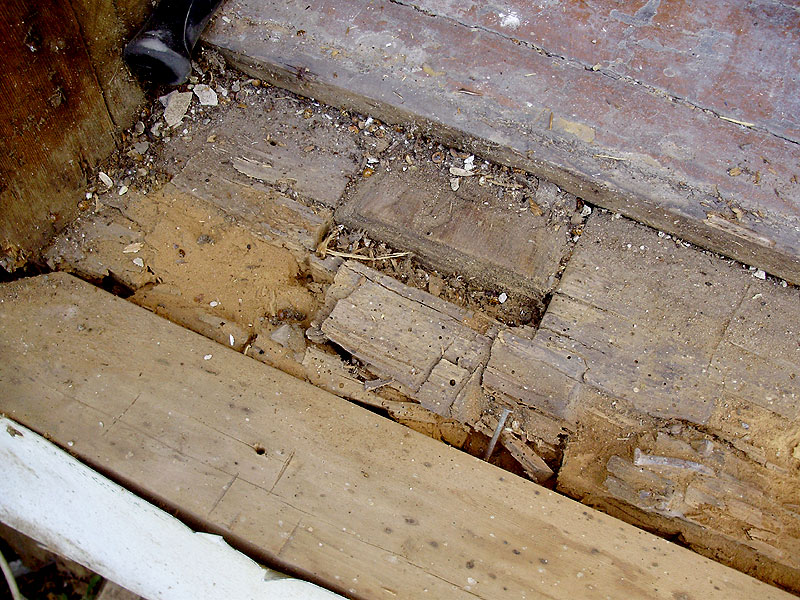
After removing the old door jamb, and the exterior casings, we found that the bottom exterior beam of the house was badly rotted.
P8050144

P8050146

P8050147

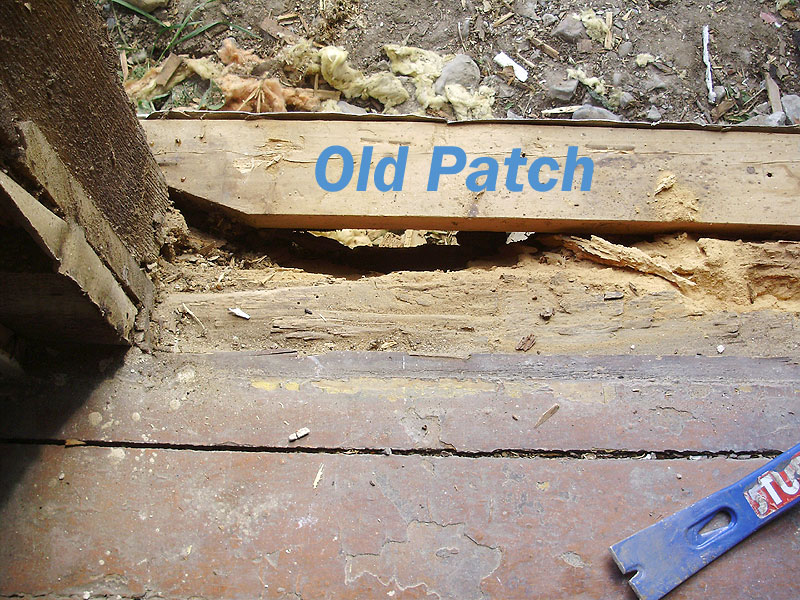
The inside half was still fairly solid, but the outer half was practically dust.
P8050149

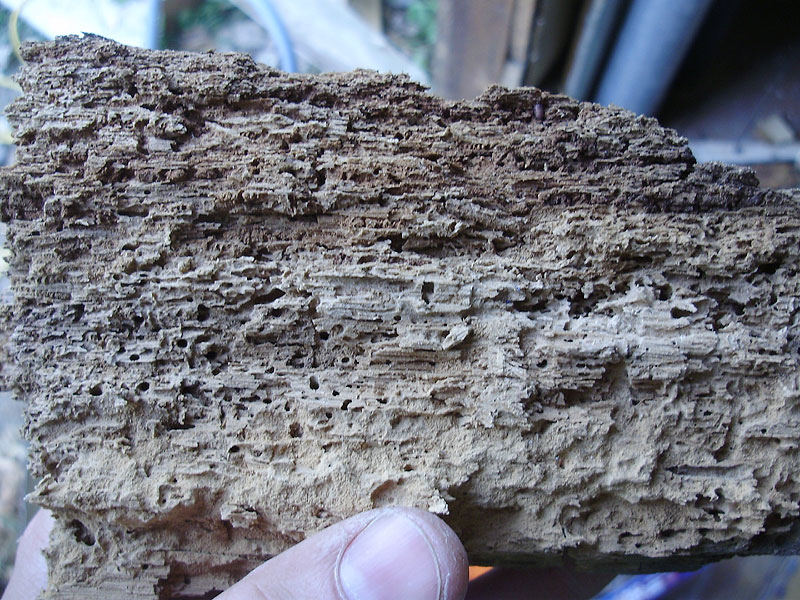
Part of the damage was due to poor corner joints and leaks in the window frame, along with leaks in the original jamb, and insect damage over the years. I suspect that half the house may be like this around the perimeter. Since we can't rebuild all this, we fixed it as best as we could.

Here we can see the original construction. Small (narrow) cedar siding, tar paper, 3/4" tongue and groove, wall studs (4" side), interior tongue and groove or barn boards, cardboard (not easily visible), lath spacers, lath and plaster.
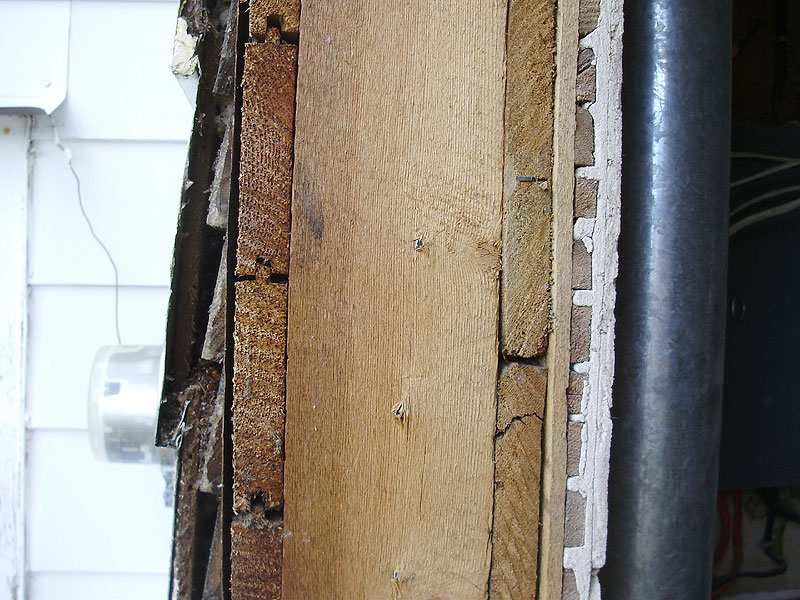
P8050150

The outer rotted half was cut away.

P8050151

P8050152

Completely toast.

P8060153

The cavity was filled with treated lumber, and small gaps were filled with sand and gravel (like the rest of the stone foundation).
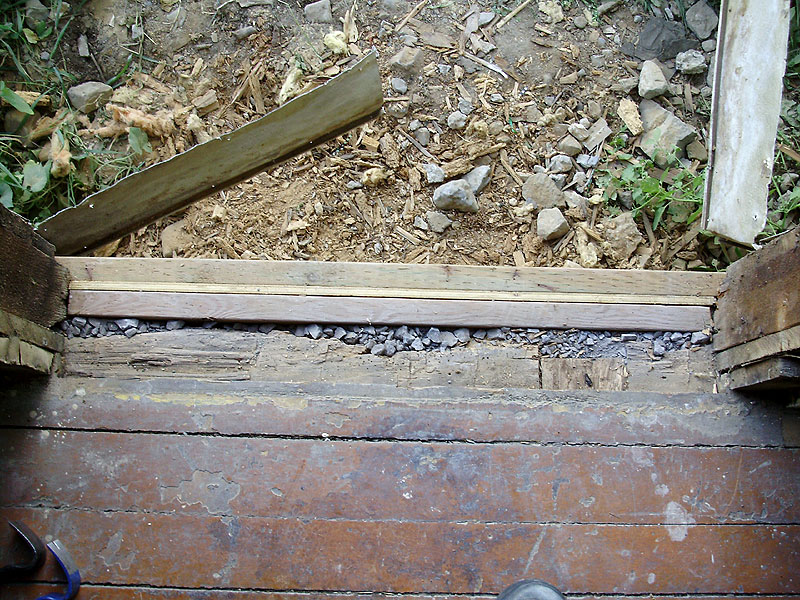
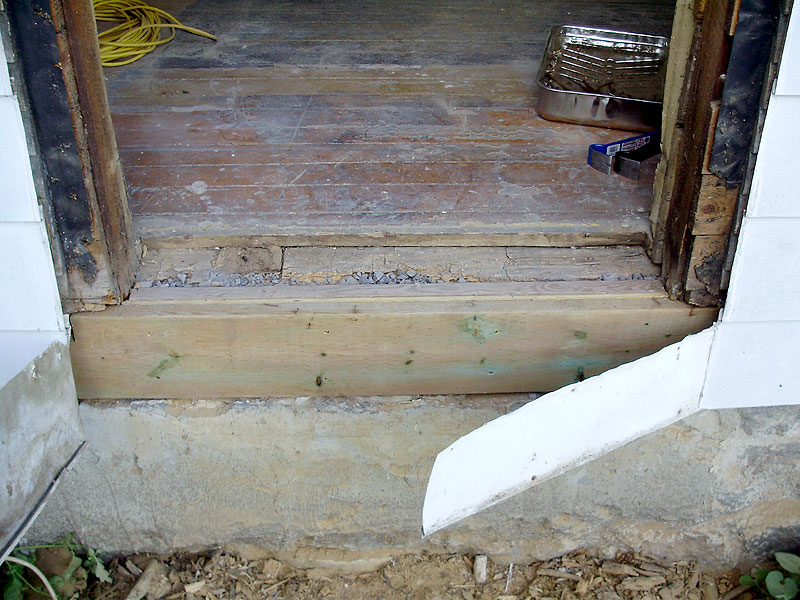
P8060156

P8060157

There will eventually be a covered porch here, so rot will not be an issue.

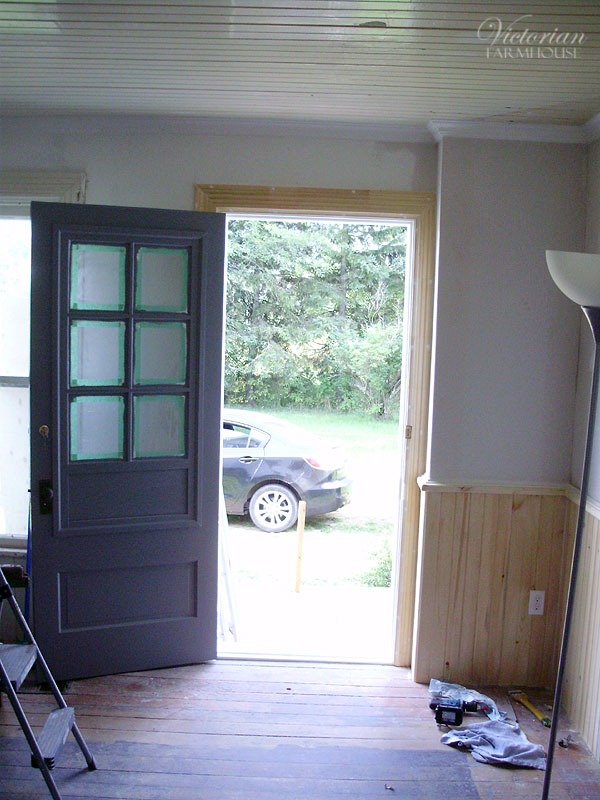
I added a cap moulding on the door to make the window portion more solid and permanent. Pierre then painted it (dark grey).
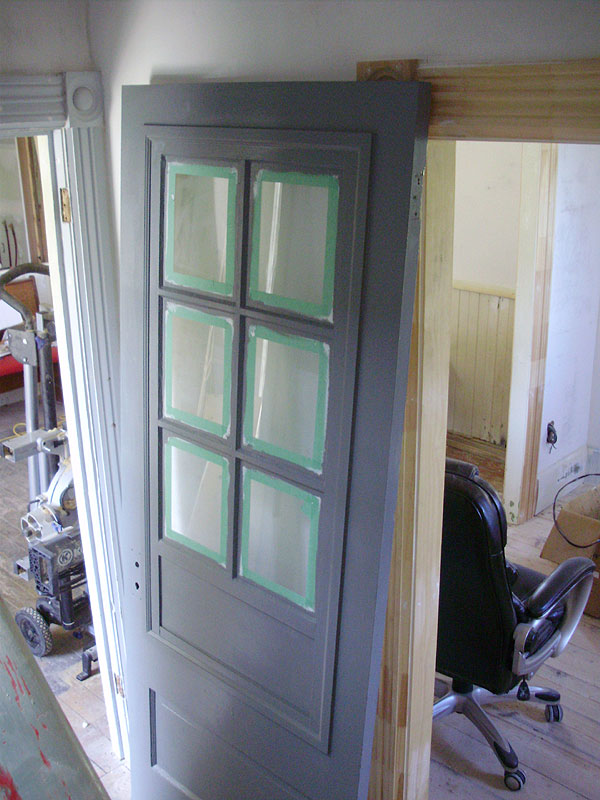
P8240358

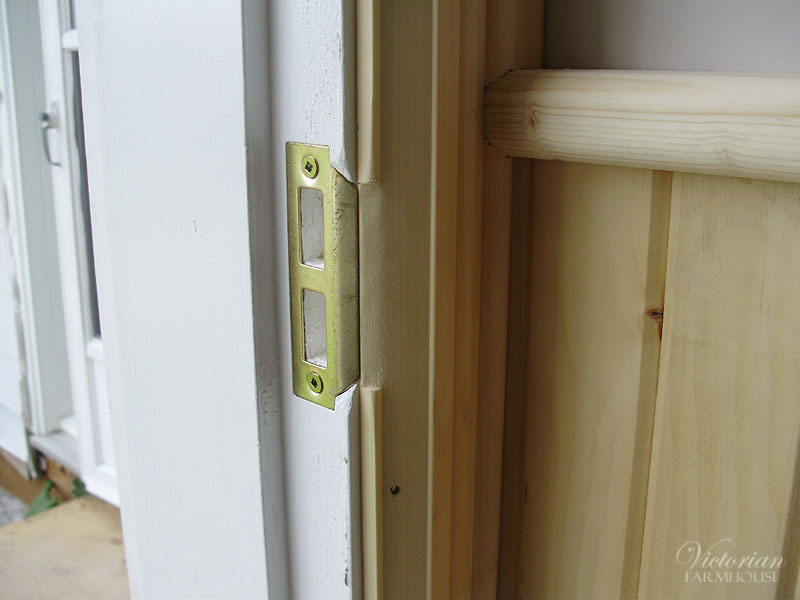
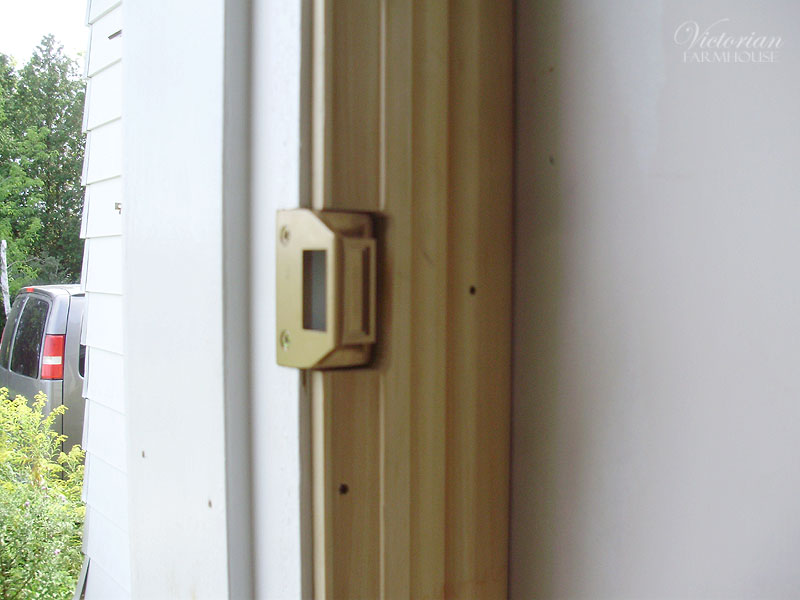
Jamb, door, and lock installed.

P8250005

Some of the details. Because of how the plate was made, I also had to tweak the door casing edge.
P8250008

P8250009

P8260012

To protect the door from the weather, and add a layer of insulation, a new aluminum door was installed on the outside. Photos of that will be posted later.

For those keeping track, this was not too bad as far as time. I had all these photos already prepared, so it's now only 12:24am.

Friday, September 25, 2015

Salvaged Front Door Project Part 5 - Installing The New Jamb And Door

The front door project is pretty much wrapped up now, and I just need to post the last few entries about it. I could post everything in one post, but there are nearly 40 photos, so I'm splitting it up in 2 parts (Part 5 and Part 6). Another third entry (Part 7) will show the installation of traditional bronze weatherstripping (only partially completed as of this writing).

As you know, the salvaged antique door has been stripped, repaired, lightly stained, and varnished, and I've built a new jamb for the door. Before installing the door, however, let's take a last look at the door that's been on the house since I bought it back in 2010.

Originally I had thought of keeping the existing (new) door jamb and simply changing the door for an antique one, but in the end, that was a stupid idea. In the meantime, I had trimmed-out the door (several years ago) but I didn't cut and install the top crown since I wasn't sure if this door would stay, and I have very limited supplies of the door crown mouldings. I'm glad I waited.


The interior of the old door is still fairly nice (keeping in mind that I still hate modern steel doors).


View from the living room (green) and from the office (grey).


The exterior of the door, however, has always looked like shit. The mouldings are not properly installed, there's a gap at the top, and I've never liked the look of the ribbed metal threshold.


There are also extra screw holes around the lock area that I never bothered to try and patch.

NOTE: The gap at the top just shows black tar paper, but it's solid wood behind this. There's no "hole" or draftiness from here, it just looks bad.


Demo started with removing all the mouldings. The plinth blocks will be reused, but the vertical boards will be too short now (I can maybe reuse them upstairs on a normal height interior door).


You can see that this newer door was installed against one original side of the door frame, and that the original door had only two 3" hinges.


The door was removed, and the jamb was unscrewed. The jamb slid out of the opening with a bit of persuasion.


You can see that the original height of the door was taller (filled with 2x4 scraps).


All the wood scrap fillers, the remains of the old door jamb, and the spray foam was scraped off. Here you can see the base of the door all cleaned up. You can see the edge of the foundation, a 2x4 bottom stud, and the edges of the barn board (diagonal) subfloor. The grey boards with a bit of a peach edge are part of the porch. And yes I'm still looking forward to getting rid of all that hideous grey tile!


This view is a bit cool to see. This shows the construction of the house. Interior drywall, cardboard/paper, tongue and groove (inside), 2x4 framing, more tongue and groove (outside), black tar paper sheeting, and finally the original cedar wood siding - which isn't visible in this photo but you can see it in the one above (followed by later additions on the rest of the house exterior).


Something that is a bit hard to make out in the other photo is that the bottom 2x4 over the foundation had been hand-cut to form a slope (like a wooden window sill) and I assume that the original door jamb's base had a slope in it. Mine didn't (if I had known I could easily have made it with a slope!) so I had to patch this area to make it square again. I did this with an "L" shaped section of wood in 2 pieces. A 1/2" thick length nailed at the front, then a new board over the whole thing.


I also had a bit too much side-to-side play in the opening, so I filled part of it by nailing some pieces of 1/2" plywood around the opening.


Once the opening was ready, the jamb was installed mainly only on the hinge side. This is important because I had to hang the door FIRST, and then adjust the jamb to clear the door around the 3 other sides. I don't even know if the door is perfectly rectangular, so I couldn't just install everything "level and square" in case it wouldn't work out. It was also much easier to just tweak everything else on the 3 other sides of the door with the door hanging in place.


I found evidence of an old door bell location that is almost at the same place as the new one! The new doorbell will be just about 2" higher than the original was.


Lots of fiddling around had to be done to get the door to sit as nicely as possible. In the end, it's NOT perfect, but it is pretty close, and it looks great, opens and closes properly (OMG! I'm not used to that!) and I'm very happy with it!


What a huge difference already! Next: mouldings!

Sunday, December 11, 2011

Fixing a Short Door Jamb

When I recycled the old door jamb from the kitchen/downstairs hallway, I ran into a problem where the ends were too short to reach the floor. I couldn't install the doorway lower because I wanted the casings to line up at the top.

To fix this, I used the same kind of trick that they use when cutting trim to install hardwood (without removing everything).

Here's how bad it was. Nearly an inch short.

Photobucket

Now, if I had planned better, I could have just lengthened the jamb before it was installed, but it didn't look like it was going to be this bad, and I skipped this.

So I just cut a scrap piece of a decent size (1 1/2" tall) and cut the jamb like this:

Photobucket

Once the notch was added, the patch was nailed in (toe nailed from the jamb above), and with some creative putty and patching it won't be noticeable anymore.

Photobucket

The other side was also short, but only by 1/2" or less so I left it as-is, since the other bedroom door is also botched at the bottom and it's not too noticeable. I'll just call it old house "charm".